
1 How Names Shape First Impressions

In the endless scroll of social media, our first impression of an unfamiliar account often takes shape before we even tap its profile picture. The screen lights up, our eyes pass over a short username, and assumptions about the person’s character, taste, and even way of dealing with the world quietly begin to form.
Imagine two names appearing in your feed: @林溪 (Linxi) and @鑫锐 (Xinrui). Even without any background information, their different emotional tones are easy to sense. The first suggests the coolness of a stream beneath trees: open, restful, and quietly growing. The second evokes the clash of metal, sharp edges, and a cool, incisive presence. In Chinese, these almost immediate associations are often attributed to character radicals and the Five Elements: a water radical seems naturally to suggest flow, while a metal radical seems to carry an edge. But can a radical really be equated so completely with an inherent element? Where did this way of reading characters, now widely used to shape personal brands online, come from?
2 The Origins of Radicals and the Five Elements
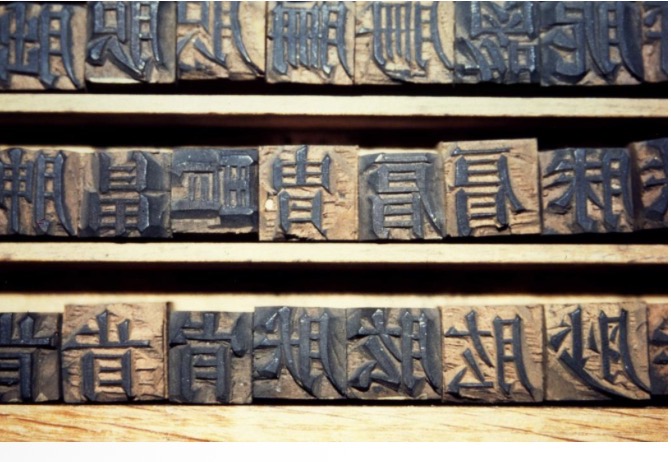
The earliest naming practices were much simpler than these modern interpretations suggest. The five principles and six prohibitions recorded in the Zuo Zhuan, or Commentary of Zuo, during the Spring and Autumn and Warring States periods concerned social and ethical standing, auspicious circumstances at birth, and avoiding names associated with mountains, rivers, or revered figures. Their purpose was to uphold lineage and ritual propriety; they were not yet connected with the Five Elements.
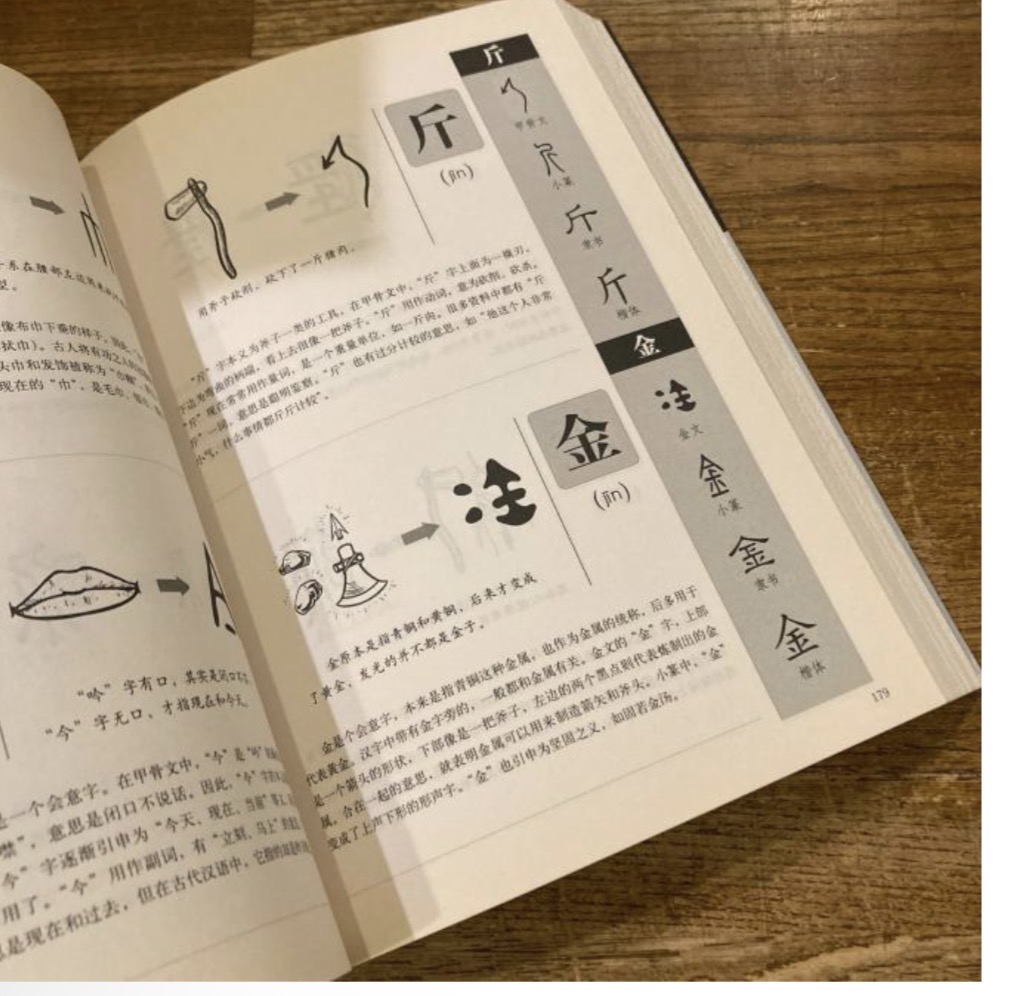
From the Han dynasty onward, the Five Elements became part of a systematic explanation of cosmic order. In his Shuowen Jiezi, or Explaining Graphs and Analyzing Characters, the lexicographer Xu Shen established metal, wood, water, fire, and earth as radicals for classifying Chinese characters, bringing written forms into a structural relationship with seasons and directions. Yet the formula so popular today—adding to a name whatever element is missing from a person’s birth chart—was not mainstream during the Han and Tang dynasties. The development of radical-based Five Elements naming into an elaborate system for correcting imbalances in an individual’s destiny came later, in the Song dynasty, when Neo-Confucian inquiry flourished. Seen in this light, these associations are not an immutable algorithm inherited from remote antiquity. They are aesthetic and metaphorical tools gradually built up by scholars and popular practice over a thousand years of cultural change.
In the early twentieth century, East Asian naming practices took another striking turn. The Japanese system known as the Five-Grid Method made its way into the Chinese-speaking world, claiming to determine a person’s life chart and good or bad fortune purely from the stroke counts of traditional characters. Such mechanical arithmetic, however, strips characters of their most subtle capacity to convey meaning. Chinese characters have never become merely empty symbols because each one contains a highly compressed image. The most vital part of that imagery remains in the visual qualities of its radical and the meaning of the character itself.
3 Read the Radical and the Meaning Together
Set numerical superstition aside, and the enduring appeal of radicals becomes clearer: they offer an underlying emotional tone. Chinese characters convey meaning through their written forms, and groups sharing the same radical often evoke strong sensory associations. Even without context, 芽 (sprout), 苗 (seedling), and 茂 (lush), all bearing the grass radical, can bring to mind plants reaching toward light and new growth breaking through the soil. Likewise, 溪 (stream), 沐 (to bathe), and 澄 (clear), with their three-dot water radical, readily suggest reflections, movement, and moisture. Using a radical to set the tone of an online identity draws on a store of cultural associations shared by readers.
In practice, though, intuition can lead into two traps. The first is treating the radical as the only criterion. Consider 涸, which carries the water radical on its left but means ‘dried up’ or ‘depleted of water.’ To read it as nourishing simply because of those three dots would be to mistake its outward component for its meaning. Radicals and meanings need to be checked against one another; the substance of a character matters more than the component visible on its surface.
The second trap is the mechanical assumption that whatever is missing must be supplied. Within traditional destiny interpretation, an absent element may be regarded as an unfavorable influence that should be avoided. Adding it indiscriminately could therefore disturb an existing balance; identifying a favorable element that harmonizes the relationships of generation and restraint is considered more important. Even without the terminology of fortune-telling, the same observation has a pointed application to personal branding. A gentle creator who favors thoughtful, reflective storytelling does not need to adopt a harsh, metallic-sounding nickname simply because they lack ‘aggression.’ Choosing a name is a matter of bringing inner character into focus and finding its tone, rather than filling an imagined shortfall.

4 How Characters Work Together in a Changed Name
A well-known name change in the entertainment industry illustrates this attention to a name’s internal structure. Before becoming widely known, Xin Zhilei (辛芷蕾) used the shorter name Xin Lei (辛蕾). Although 辛 has no metal radical, in the traditional Heavenly Stems system it represents yin metal, associated here with purity and an austere, cutting quality. 蕾, meaning a flower bud, bears the grass radical and points toward wood. Under this interpretation, metal confronts vegetation within the name itself, creating a strong tension in which metal restrains wood: decisive and clean, but with little room for softness or adjustment.
The later name, 辛芷蕾, inserts 芷, another character with the grass radical. Referring to an aromatic herb, 芷 joins 蕾 to strengthen the name’s plant imagery, turning a solitary, vulnerable bud into a fuller expanse of growth capable of receiving and transforming the sharpness associated with 辛. There is also a quieter association in its sound: 芷 is pronounced like 止, meaning ‘to stop.’ Read this way, it softens the subconscious echoes of 辛苦 and 辛劳, words for hardship and toil, and gives the name a suggestion of pausing, composure, and release from relentless striving.
The point of examining this example is not to suggest that a new name can overturn destiny. It is to show how the overall presence of a name is woven through language. A radical does not work in isolation. It interacts with meaning, traditional stem-and-branch associations, and the relationships between characters to produce the name’s combined effect.
5 How to Choose a Nickname That Suits You
Bring these observations back from a celebrity example to everyday digital life, and choosing a social media nickname becomes more than a random arrangement of dictionary entries. It becomes a careful way of shaping how you present yourself. The starting point is to identify the impression you instinctively want to convey.
1. Decide what kind of presence you want to convey
When you sit down to choose a name that may accompany your account for years, first ask what kind of window you want to open to the world. An observer drawn to quiet reflection and gradual growth may naturally favor the imagery of wood and water. Someone who wants to take a position in professional debates and demonstrate sharp judgment may feel at home with the firmness and coolness of metal. A communicator hoping to inspire others and create an energetic connection may find an initial spark in fire. Someone who wants to offer steadiness amid the rush of information may be drawn to the weight and quiet of earth. None of these choices is an obligation imposed by fate. They depend on recognizing your own aesthetic preferences.
2. Check that meaning and form support each other
Once you know the direction you want to take, the more exacting task is to check that a character’s meaning supports its visual form. Many people browse old books for characters with the desired radical, only to overlook a meaning that works against their intention. Just as 涸 does not convey nourishment, choosing 朽 (decayed) or 枯 (withered) for the warmth of wood allows their associations with decay and stagnation to undermine the visual appeal of the tree radical. By contrast, 桐, the upright paulownia tree associated in traditional imagery with a resting phoenix, allows radical and meaning to reinforce each other. The radical provides the first introduction; the depth of the meaning determines whether that impression holds up under closer attention.
3. Test how it looks on screen and sounds aloud
After selecting characters, test them in the setting where they will actually appear. A combination that looks balanced and meaningful on paper may reveal practical weaknesses in the narrow name field of a mobile app. Uncommon characters with dense strokes can shrink into an indistinct patch beside a small profile picture. Unfamiliar pronunciations and awkward sound combinations can make voice input and spoken recommendations unnecessarily difficult. In digital communication, readability, ease of pronunciation, and recognition on a small screen matter more than absolute purity within a Five Elements classification. Traditional radicals can serve as a compass for thought; they should never become rules that restrict expression.
6 Recognizing Yourself in a Name
After all this consideration of form, sound, meaning, and radicals, the enduring value of Chinese characters and the Five Elements lies neither in divining fortune nor in predicting the future. It lies in the vast vocabulary of qualities and associations they offer, shaped by two thousand years of cultural history.
In a digital age where algorithms constantly assign labels and fragments of data sketch out our identities, a carefully chosen nickname will not write your content for you or automatically attract thousands of followers. Its value rests in something smaller and more certain. Each time you open a device and see the cursor blinking beside that name, you can recognize that the identity about to appear before others is one you have deliberately chosen for yourself, stroke by stroke, rather than a portrait an algorithm has handed to you.

