
Many people pick a “lucky day” before moving, opening a business or holding weddings. This folk practice is known as choosing an auspicious date.
What is it?
It is a traditional Chinese folk custom.
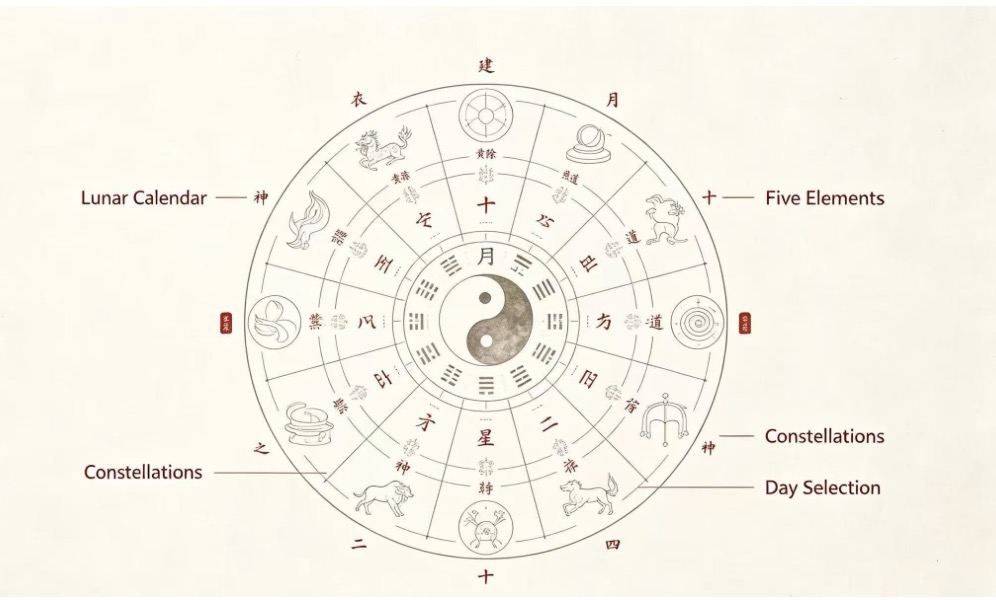
Based on the lunar calendar, the Five Elements, constellations and deities on duty, ancient people calculated what each day was suitable or unsuitable for. The core idea was to follow the natural rhythm, avoid misfortune and hope for a smooth outcome.
Its origin
Ancient Chinese believed that cosmic timing affected human affairs, so important events should be held at a proper time. It started as calendars for farming and gradually developed into the almanac culture we see today.
Common occasions
Traditionally, people selected auspicious days for major life events:
weddings, house‑moving, shop openings, construction, sacrifices and trips.
It is more of a ritual and a heartfelt wish for new beginnings.
Modern perspective
Objectively, it is folk culture with no scientific basis.
We do not need to follow the old rules blindly, but we can view it as a part of ancient heritage. A so‑called “good day” is mostly psychological comfort. True success comes from hard work and careful planning.

